
Andreessen Horowitz

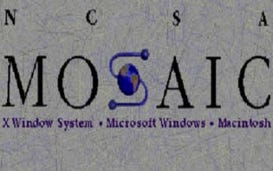
Marc Andreessen and Ben Horowitz, the founders of Andreessen Horowitz, met when Marc was working on his search engine Mosaic. Marc was working for Next College Student Athlete (NCSA) while he was in college, creating Mosaic, and hired Ben. Marc believed that the internet should be simple and easily accessible, contrary to popular belief. This is the first example of what would become one of Andreessen Horowitz’s strategies for investing; taking something esoteric or unknown and making it accessible to everyone to broaden the playing field. The company took off, but since Marc was working for NCSA, they owned the rights to the technology that he was developing. Because of this issue, Marc started his own company: Mosaic Communications Corporation. Naming his new company after the old company caused some problems, including, primarily, NCSA suing them, so they changed the name of the company to Netscape. Marc hired Ben again at his new company as head of their enterprise web servers division. After a short sixteen months, Netscape was ready to go public. Netscape was set to IPO at $28, yet demand was so high that the stock hit $74.75 on its first day of trading. After the first day of trading, the stock settled at $58 giving Netscape a market cap of 3 billion dollars. Many point to Netscape as the origin of the IPO pop and the beginning of the extremely high valuations which culminated in the dot com bubble. After Netscape IPO’d, it consistently doubled its revenue quarter after quarter.
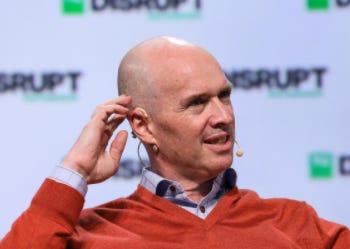
At this time, Microsoft was looking to break into the search engine market and it just so happened that one of Microsoft’s employees had control of the original Mosaic search engine that Marc had created. Microsoft took the Mosaic engine, turned it into Internet Explorer, and sold it alongside the new Windows 95 for free. This made Netscape’s main product, their search engine, free, which spelled trouble for them. The only product that Netscape had left to offer was their enterprise web server business, headed by Ben. Going forward, Netscape continued to lose market share to Microsoft, ending in the sale of Netscape to America Online (AOL) in a $4.2 billion all-stock deal. Marc, for a short time, became the Chief Technology Officer (CTO) of AOL, and Ben became the VP of e-commerce at AOL. After AOL, Ben moved to Silicon Valley to start a cloud computing company, named Loudcloud. Ben was just a tad ahead of his time with that one. Marc invested $6 million dollars in Loudcloud but refused a board seat because he did not see any value in his being on the board. This is another principle of Andreessen Horowitz: they always leave the owners in control and never get in the founder’s way. This is an early example of Marc already embodying this principle. Loudcloud went through some rough times until they sold to Hewlett Packard (HP) in 2007.

Marc and Ben realized that this was the era of web 2.0. They recognized that unlike the dot com bubble of the early 2000s, the valuations of the new wave of internet-driven companies were going to be very high, yet this time the so-called “bubble” would not pop because the high valuations will be justified by the outsized profits from this new wave of companies. Therefore, Marc and Ben began to invest together. Angel investing is the first round of investment an entrepreneur raises after asking friends and family. Marc and Ben invested in the angel rounds of Facebook, Twitter, LinkedIn, and Zinga. Turns out Peter Thiel, the same person that took Musk’s job at PayPal and then funded SpaceX, was the person who introduced Marc Andreessen to Mark Zuckerberg. When Yahoo offered to buy Facebook for $1 billion, Marc Andreessen was the one person who told Zuckerberg not to sell.